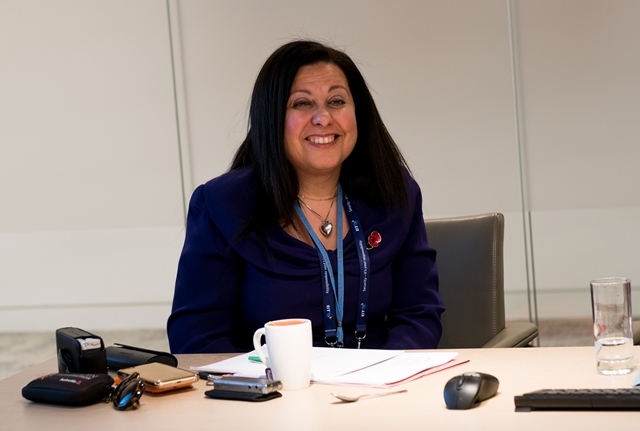
#PurpleTalk is our campaign to drive conversations about the personal and business benefits of a disability confident workforce. We do this by sharing stories from employees who are managing their disability or health condition and getting on at work. Paul Smyth Head of IT Accessibility for Barclays and co- chair of the Reach network’s visual impairment group, shares his personal perspective on visual impairment, disability and employment.
“Firstly, a little about me – I lost most of my useful vision as a teenager, became diabetic in my 20’s and have just come back to work after major spinal surgery in my 30’s. Needless to say, I have first-hand experience of several impairments and have learned a lot from many more Reach network colleagues with a disability story to tell. I’ve had a varied career at Barclays over the past 14 years, working as a visually impaired accountant, risk hedger and for the past 5 years leading our Digital Accessibility agenda.
Coping with versus living with a disability
When most people hear the word “disability”, they think of a faulty body or mind. I think back to my 8-year old self sitting in the doctor’s room and being told “you have a rare eye condition and will lose most, if not all of your vision”. I remember this moment as if it were yesterday. As these words sunk in, what filled me with panic wasn’t the fact that I wouldn’t be able to see again but rather I wouldn’t be able to ‘fit in’ again – with my school friends. I went about either denying or defying the facts for many years whilst I came to terms with this reality and whilst choosing to ignore this part of my identity. I think of this time in my life as the “coping with a disability” chapter since it was full of having to adapt and find different ways to do the same old things. For me that included using powerful magnifying glasses and binoculars to read large print textbooks or make out teacher’s scribble on blackboards. Most importantly though it meant grafting – instilling in me a gritty determination to work doubly hard to figure out and follow through on “another way” to do daily trivial tasks. Popping your finger into the top of a mug when pouring a kettle to make a cup of tea for instance avoids over-pouring and spill-over. Regardless of how the Queen says tea should be made, putting the milk in first means you won’t scold your finger as you’re filling up the mug with boiling water. I dare you to try making your next cup of tea or coffee with your eyes shut to gain a glimpse into my world! Of course, with the marvels of technology and innovation, there’s even buzzers that blind people can buy and perch on the lip of their mug nowadays to guard against 2nd degree burns as they’re pouring their hot drinks.
As my sight worsened as a teenager, my memory, creativity and determination all improved to compensate for and adapt to living in a visual world as a non-visual person. This “living with a disability” stage of my life brought self-confidence, a positive outlook and a belief that my one disability of sight loss had led to me developing many more skills, forged out of necessity to survive. It’d often be me who’d find the family car when lost in large multi-storey car parks or know what direction we’d come from when traipsing around unfamiliar cities on holiday. It’s ironic that visually impaired people can often better pay attention to their surroundings or better listen to what’s being said by others even without the benefit of seeing body language. One of the most important things I learned was how to assertively ask for help from others. When it took me longer to copy down a sentence from the black-board at school, I found help through my sighted classmates or teachers, helping them to help me.
Pride against prejudice
I’m startled when I hear the statistics that 1 in 5 people have a disability and that of these, 83% of them acquired their disability in their adult working life. People with newly acquired disabilities usually respond in three ways when coming to terms with the news. They either let the bad news and hopelessness eat them up, they either deny the facts or they ‘own it’ – i.e. they gain a sense of empathy and compassion for themselves and others similarly impacted. My advice is to lean in and embrace this new, unique part of themselves, in time owning their disability identity. Barclays Reach network’s This Is Me campaign on disability and mental health provides a platform to do exactly this through colleagues telling their own personal stories of difference.
Get informed, inspired and involved.
Only by normalising the conversation around disability can we reduce discrimination, prejudice, injustice and poverty. This may sound heavy but within the UK at present, 81% of UK adults are in employment compared to 49% of disabled adults. That’s a disability employment gap of ~3million potential workers who are desperate for meaningful employment and bring unique perspectives, skills and experiences to the party. Whilst society’s attitudes to disability are warmer nowadays due to the positive impact of the Paralympic games and increased media coverage, the employment rates of disabled people have is now leading the way through our partnership with the Government’s DWP Disability Confident campaign and our dedicated early careers hiring programmes which promote disabled talent.
We have made huge leaps in Barclays, but there’s a huge task ahead to take these messages on disability and spread them throughout our lives and across our world. Only then can we remove barriers, improve lives and unlock human potential.”
This content has been chosen for public access.
The full blog and all content is available to Members.
The full blog and all content is available to Members.